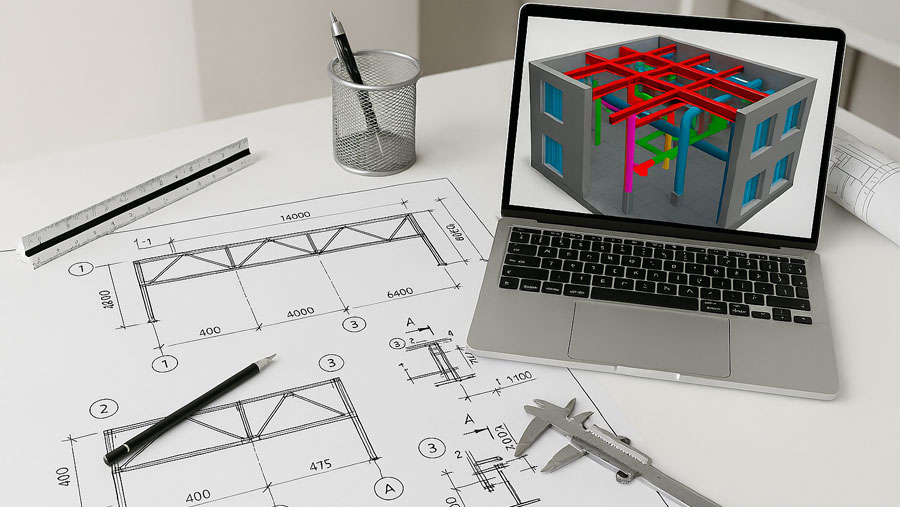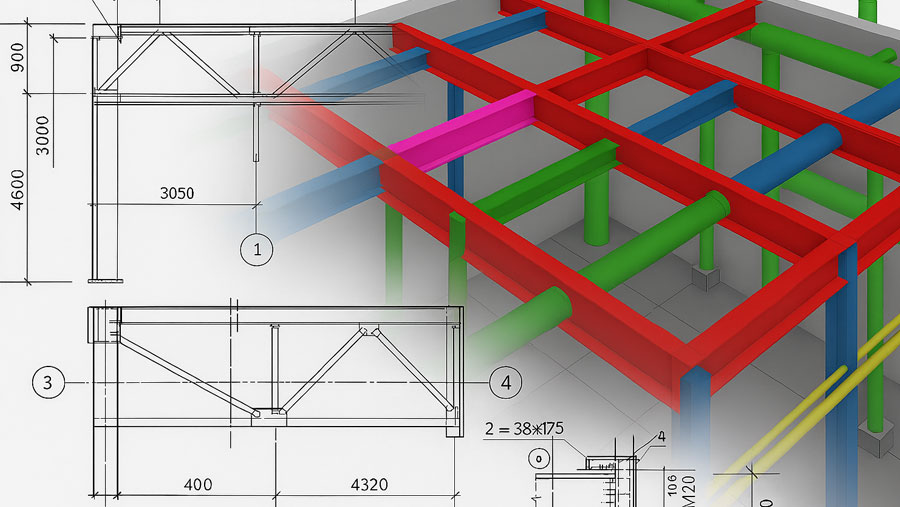
Outsourcing shop drawing services has evolved from a cost-driven decision into a strategic approach for managing complexity in modern construction projects. Across the United States, contractors and fabricators face fluctuating workloads, compressed schedules, and increasing technical demands. Maintaining a fully staffed in-house detailing team under these conditions is often inefficient and difficult to scale.
Outsourcing allows firms to access specialized expertise, advanced tools, and flexible capacity—without sacrificing quality or control.
Why U.S. Contractors Are Increasingly Outsourcing Shop Drawings
The construction landscape in the U.S. has changed significantly. Projects are larger, coordination requirements are higher, and compliance expectations are more rigorous.
Key drivers behind outsourcing include:
- Shortage of experienced detailers and engineers
- Need for rapid scalability during peak workloads
- Pressure to reduce overhead costs
- Demand for faster turnaround times
- Increased reliance on BIM and 3D modeling
Outsourcing addresses these challenges while allowing contractors to focus on execution rather than documentation.
In-House vs Outsourced Shop Drawing Teams: A Practical Comparison
Choosing between in-house and outsourced teams requires an honest assessment of operational priorities.
In-house teams offer:
- Direct control over daily workflows
- Immediate availability for internal coordination
- Familiarity with company-specific standards
However, they also require:
- Continuous payroll and benefits
- Ongoing training and software investment
- Difficulty scaling up or down quickly
Outsourced teams provide:
- On-demand access to skilled professionals
- Project-based pricing and predictable costs
- Ability to handle multiple projects simultaneously
For many U.S. firms, outsourcing delivers greater flexibility with lower risk.
Understanding the True Cost of Outsourcing Shop Drawings
Outsourcing is often perceived as a cost-saving measure, but its real value lies in cost efficiency rather than low pricing.
Cost advantages include:
- Reduced overhead expenses
- No long-term staffing commitments
- Faster production reducing schedule-related costs
- Fewer errors and rework expenses
When evaluated holistically, professional outsourcing often results in lower total project costs—even if per-drawing rates appear similar.
Quality Control and Code Compliance in U.S. Projects
One of the primary concerns with outsourcing is quality assurance. This risk is mitigated by selecting a provider with proven experience in U.S.-based projects.
A qualified partner should demonstrate:
- Knowledge of U.S. building codes and standards (AISC, ACI, AWS, IBC)
- Experience with local authority review processes
- Internal quality control and review workflows
- Professional Engineer involvement when required
Quality outsourcing strengthens compliance rather than compromising it.
The Role of Communication in Successful Outsourcing
Effective communication is the backbone of any successful outsourcing relationship. Clear expectations and structured processes prevent misunderstandings and delays.
Best practices include:
- Defined scopes of work and deliverables
- Regular coordination meetings or updates
- Centralized document and revision control
- Clear turnaround timelines and escalation paths
Strong communication transforms outsourced teams into seamless extensions of internal staff.
Flexibility for Fast-Track and Multi-Project Environments
U.S. construction schedules are rarely static. Outsourced shop drawing services provide the flexibility needed to respond to changing demands.
Advantages include:
- Rapid scaling during peak periods
- Ability to support overlapping design and construction phases
- Faster response to revisions and field changes
- Time-zone leverage for accelerated delivery
This flexibility is particularly valuable for contractors managing multiple projects simultaneously.
Best Practices for Selecting the Right Outsourcing Partner
Choosing the right shop drawing partner is critical to realizing the benefits of outsourcing.
Key selection criteria include:
- Proven U.S. project experience
- Dedicated project management support
- Advanced BIM and 3D modeling capabilities
- Transparent pricing and schedules
- Commitment to long-term collaboration
A strong partner relationship delivers consistent results across projects.
Outsourcing as a Long-Term Competitive Advantage
When approached strategically, outsourcing shop drawing services enhances efficiency, quality, and scalability. It allows construction firms to adapt quickly to market demands while maintaining high technical standards.
Rather than viewing outsourcing as a temporary solution, many U.S. contractors now see it as a core component of their operational strategy.
Conclusion
Outsourcing shop drawing services enables contractors and fabricators to navigate complexity with confidence. With the right partner, it delivers speed, accuracy, and reliability—without the burden of maintaining large in-house teams.
In a competitive construction market, smart outsourcing is not a compromise. It is a strategic advantage.